January 15, 2026
You may be wondering why this is here, but I referenced it in my other post from today.
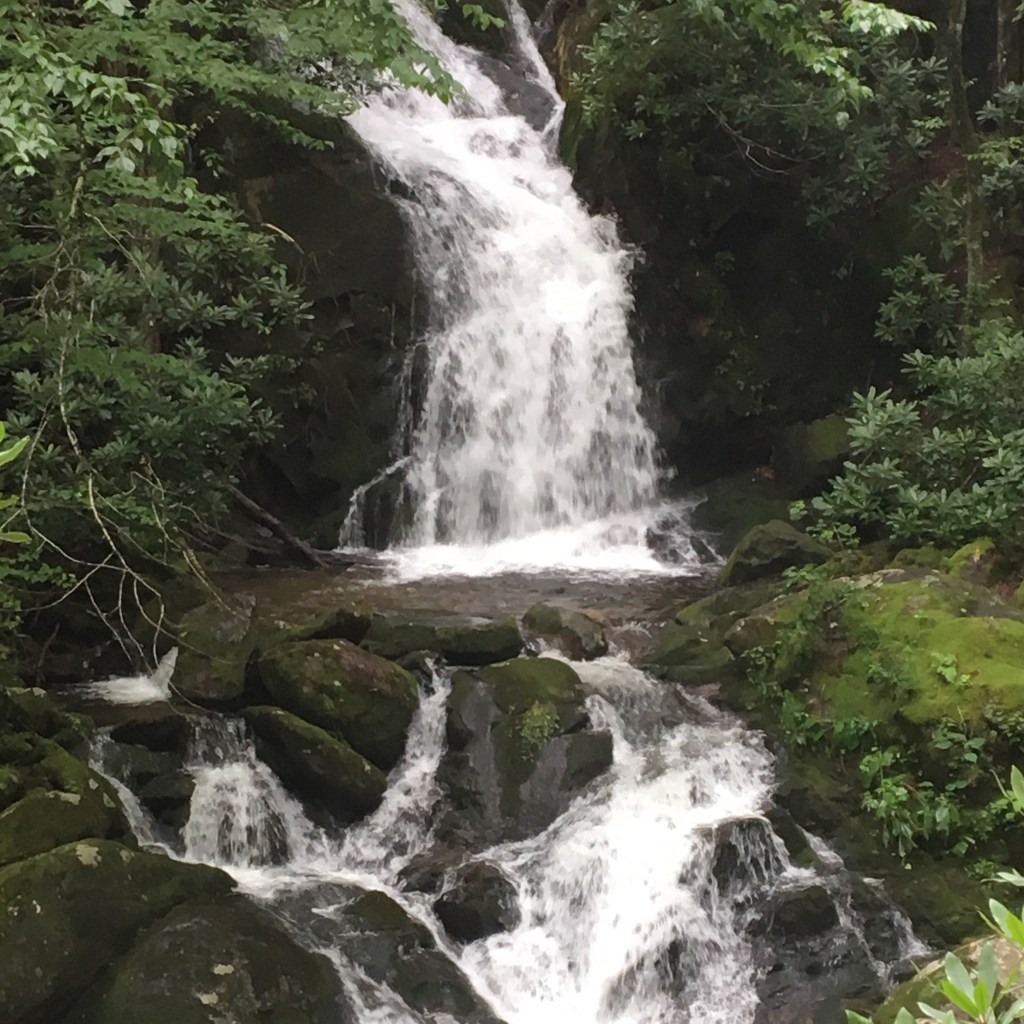
When I was a little girl, my daddy took us up to the North Fork River to slide down small rocky runs, splash in natural pools, and play in cold mountain water. I remember the rush of sliding down a small waterfall, plunging under, and being scooped back up—lifted high over my daddy’s head. Those icy dips left me with a permanent, embodied memory: water as joy, safety, and exhilaration.
On the way home, we’d stop for treats at an ice cream stand in Swannanoa. By the time I was in school, that stretch of the North Fork was closed to swimming. Then in the 1970’s all the little shops and stands went out of business after I-40 diverted traffic away from Highway 70. Even now, those losses feel quietly connected.
My next swimming chapter came in childhood, riding my bike four and a half miles down back roads to meet friends at Recreation Park on Swannanoa River Road. In fourth grade, that abruptly stopped. We joined a private indoor pool in Haw Creek—farther away, harder to reach, hot and stuffy. I hated it. After a few years, we stopped going altogether.
Decades later, I learned why Rec Park was no longer an option. Pool segregation was ending in the late 1960s and early ’70s, and my mother—like millions of other white parents—fled public pools for private, white-only ones. I encourage anyone reading this to explore that history further. It matters.
As a teenager, my love of water expanded from the mountain creeks and branches of my childhood to lakes and rivers. I rafted and canoed, and I swam the water I floated. Kayaks came later. As a freshman at UNC–Asheville, I took swimming as a PE class and learned proper strokes and basic water safety for the first time. I also discovered something essential: I loved lap swimming. It was quiet, meditative, grounding.
A lifeguard noticed I was a strong swimmer and suggested I try swim team practice. I went twice and hated it. Competitive swimming was everything lap swimming was not—loud, pressured, frantic. I decided then that competition wasn’t for me.
Coming to UNC–Asheville and leaving the environment of my abusive mother marked the beginning of real self-discovery. I was learning how to be calm, how to care for myself, how to inhabit my body safely. Lap swimming became an anchor for my physical and mental well-being, one that would stay with me for the rest of my life.
In my twenties and thirties, I lived in Montana’s Flathead Valley and savored the icy lakes and streams. I also swam laps at a beautiful fitness center in Kalispell—one of several wellness centers funded by Phil Jackson, a Montana native committed to rural health. Flathead County was vast and sparsely populated; one local paper still ran items like “Mary Sue’s cousin is visiting from Billings” and detailed what the Methodist women discussed at their meeting and what refreshments were served. In that environment, people knew I swam, and many invited me to join Masters Swim.
I always declined. I associated Masters Swim with that miserable freshman practice.
After separating from my first husband, my three-year-old daughter and I moved into town, directly across a field from the fitness center. Wanting to shake things up, I impulsively signed up for Masters Swim twice a week—without any idea what I was walking into.
On my first day, swimmers were already warming up, four circle swims churning through the pool. I learned that Lane 1 was the fastest, with lanes slowing as they moved outward. Thinking to myself that with my years of experience I probably belonged in Lane 2 or 3, but wanting to be respectful, I chose Lane 4.
I immediately jammed the works.
What I didn’t know was that Kalispell’s Lane 4 was faster than the fastest lane in most Masters programs. Flathead County was home to multiple extreme endurance teams—mountain-bike–swim–desert–run types. No one warned me I was signing up to swim with ninja athletes.
After warm-ups, we gathered around whiteboards listing drills that sounded like a foreign language. The coaches reassured me I’d catch on. Back in the water, I cried through the last 35 minutes of the session—reprogramming my stroke left me gasping, gulping, awed and overwhelmed by the water.
To get through it, I thought of children I knew who went to school hungry, dirty, or bullied—who endured misery daily with no choice. If they could do that for seven hours a day for 240 days a year, surely I could tolerate one hour twice a week. I also thought about quitting. Obviously these Masters swimmers had lost perspective. I remembered a Māori woman I’d met at an international gathering of Indigenous women, the only Montanans she had met were on extreme teams swarming the island where she lived. Her face was a mix of amusement and bewilderment as she chuckled, shrugged and said, “Leave it to Pākehā to turn being in nature into a contest.” That memory made me laugh, even as I swam and cried.
The crying didn’t last forever. After a couple of months, it stopped. I never moved from Lane 4 to Lane 3, but my stroke changed. When I started, one length of the pool took 40 seconds and 26 strokes. Six months later, it took 32 seconds and 18 strokes.
Eight seconds. Eight strokes. Sixty-four lengths in a mile.
For twenty years, I had been a bulldozer in the water—powering through on strength and will, fighting my way from one end to the other. And it had given me so much: peace, breath, connection, a body I could trust. I wasn’t doing it wrong. I just didn’t know there was another way.
Masters Swim taught me to be a kayak instead: rotate, stretch, extend, glide. To swim tall. To feel for pressure and path. To time my breath not to my effort but to my rhythm. The water didn’t change. The benefits didn’t disappear. But suddenly there was ease, even though I had been unaware that there had been struggle. Now there was flow where there had been force.
I learned that transformation isn’t about trying harder. It’s about learning to move differently through the medium you’re in. Sometimes growth requires staying in the water long enough to stop bulldozing and start gliding—to find the line of least resistance and follow it home.
I would love to live like a river flows, carried by the surprise of its own unfolding.―John O’Donohue
 I Want to Tell You
Leave a comment